
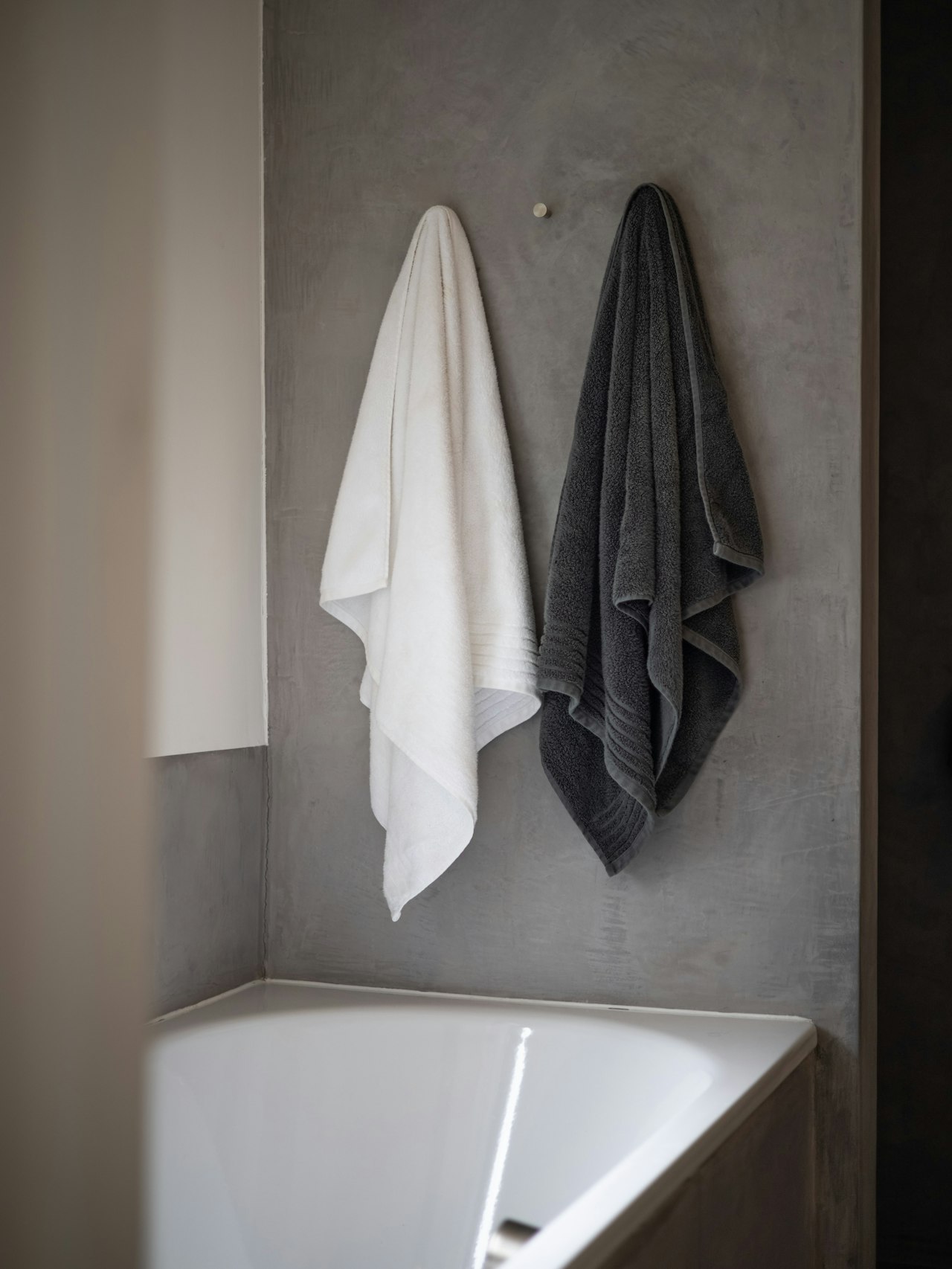
Most people have had the experience. A new set of bath towels feels soft and fluffy for a few weeks. Then, slowly, the towels get thinner, rougher and less absorbent. The edges start to fray, and lint keeps turning up in the dryer filter. Within a year or two, the set looks tired.
Towels do wear out eventually, but they should last far longer than that. Early wear almost always comes down to a handful of causes, and most of them can be avoided with better choices at the store and small changes in the laundry room.
Cause 1: Short Cotton Fibres
Cotton fibres come in different lengths. Short-staple cotton is cheap and common, but short fibres leave many loose ends in the yarn. Every wash and every rub against your skin pulls a few of those ends free. That is the lint you see in the dryer, and it is literally your towel leaving.
Long-staple and combed cotton hold together far better. Combing removes the shortest fibres before spinning, leaving a smoother, stronger yarn that sheds less and pills less. If you want towels that last, the fibre is the first thing to check. Look for long-lasting bath towels that name the cotton type clearly rather than just saying "100% cotton."
Cause 2: Loose, Thin Weaving
A towel's weight, measured in GSM, gives a rough idea of how densely it is woven. Very light towels, around 300 to 400 GSM, have fewer loops and more open space in the base weave. They dry fast but wear through sooner.
Around 600 GSM is a good target for an everyday bath towel. The loops sit close together, which spreads wear across more fibre and keeps the towel feeling soft for longer. Heavier towels exist, up to 800 GSM or more, but extra weight also means longer drying times, and towels that stay damp for hours can develop odours and break down faster.
Cause 3: Weak Hems
The edges take more stress than any other part of a towel. They get pulled when you hang the towel, tugged in the washing machine and rubbed against rails. A loosely stitched hem is often the first place a towel fails.
Before buying, look at the corners and edges. Stitching should be tight and even, borders should lie flat and there should be no loose threads. Good finishing is one of the clearest signs that a towel was made to last.
Cause 4: Fabric Softener
This one surprises people. Fabric softener coats fibres with a waxy film that makes towels feel silky at first. Over time that coating builds up, blocks the fibres from absorbing water and leaves towels feeling stiff and greasy. Many people then wash more often and at higher temperatures to compensate, which adds more wear.
Skip softener entirely for towels. If they feel stiff, a cup of white vinegar in the rinse every few washes clears residue and restores softness.
Cause 5: Too Much Detergent and Too Much Heat
Using more detergent than needed leaves residue that stiffens fibres. Very hot washes and high dryer heat also weaken cotton over time. Most towels clean well at warm temperatures with a normal dose of detergent.
Tumble dry on medium, and take towels out while they are dry but not baked. A good shake before drying helps lift the loops so they stay fluffy.
Cause 6: Leaving Towels Damp
A towel left balled up on the floor or crammed on a hook stays wet for hours. Damp cotton is a home for bacteria and mildew, which cause odours and slowly break down the fibres. Hang towels flat or folded over a rail so air can move through them, and wash them every three or four uses.
How to Choose Towels That Last
When you shop, use this short list:
- Fibre: long-staple or combed cotton, stated clearly
- Weight: around 550 to 650 GSM for everyday bath towels
- Loops: dense, even and springy
- Hems: tight stitching, clean corners, flat borders
- Testing: independent certification such as OEKO-TEX Standard 100
- Origin: country of manufacture listed plainly
Portugal is well known for terry towels built to these standards. Several design-led brands use Portuguese mills for exactly this reason. Everlayer, a Canadian-founded brand, has its 600 GSM combed cotton towels woven in Portugal and tested to OEKO-TEX, and sells them both online and on Amazon. If you want to see how different high-end options compare on durability and feel, this look at high-end towel brands sets out the trade-offs in plain terms.
When It Is Time to Replace a Towel
Even good towels reach the end eventually. Signs it is time: the towel has visible thin patches, it no longer absorbs water well even after a vinegar rinse, the hems are unravelling, or a musty smell returns soon after washing. Old towels make excellent cleaning rags, so they do not need to go to waste.
The Bottom Line
Towels wear out fast when they start with short fibres, thin weaving and weak hems, and when they are washed with softener and left damp. Choose dense, well-finished towels made from long-staple or combed cotton, look after them simply, and a good set should serve you well for many years.